The One Big Beautiful Bill: What PT Students and Educators Need to Know About “Professional Degree” Redefinitions
By Ernesto Mendez, PT, DPT, OCS, FAAOMPT, Osteopractor
Founder, The Physio Guide Network
The U.S. Department of Education’s proposed rule under the One Big Beautiful Bill Act (OBBBA) is poised to reshape the landscape of professional education dramatically. While most media coverage focuses on medicine, law, or pharmacy, the ripple effects on allied health professions — particularly physical therapy (PT) — are profound. This blog will explore what the changes mean for PT students, educators, and programs, balancing practical advice, professional perspective, and strategic foresight.
Background: The Rule and Its Timing
Effective Date: July 1, 2026
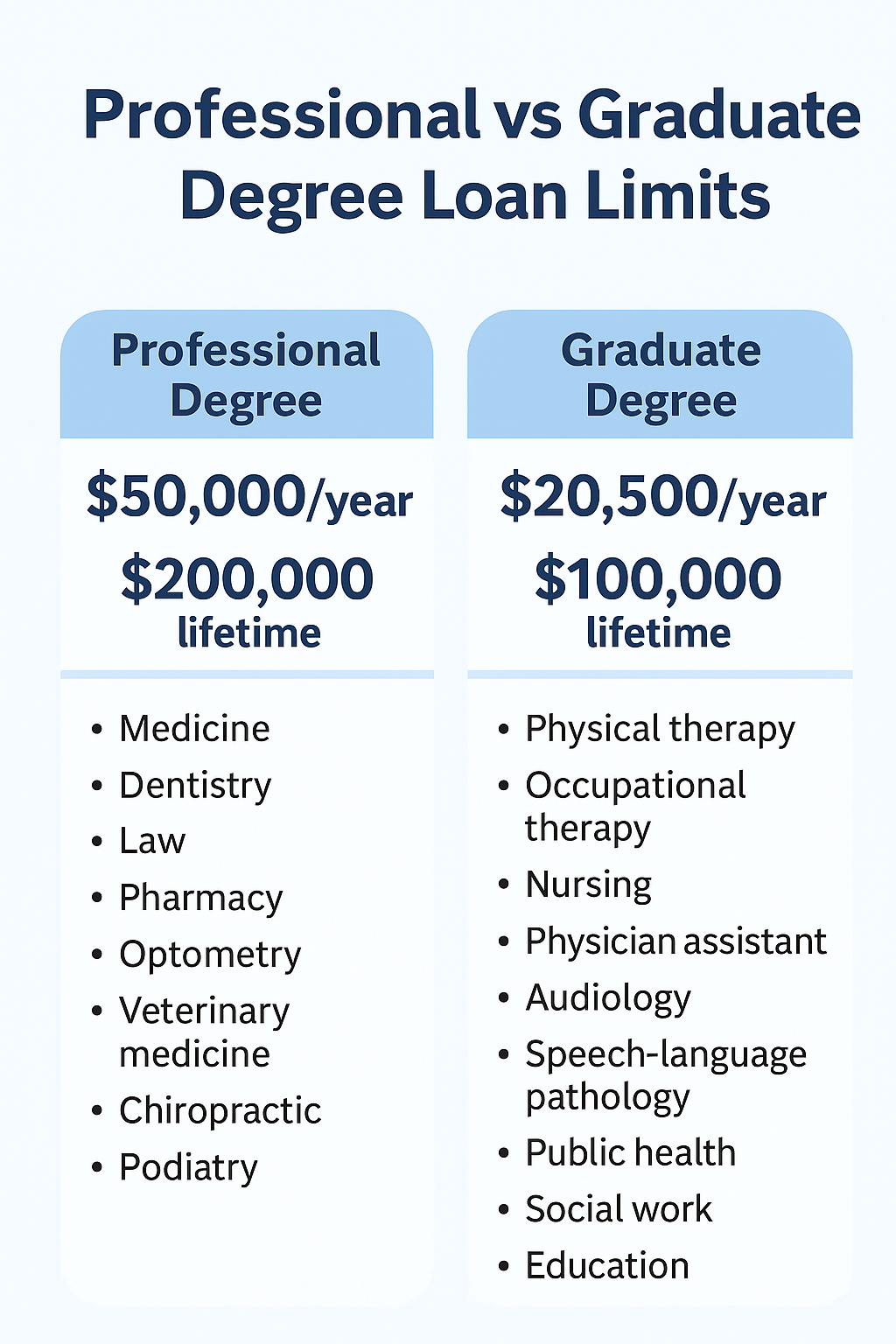
Key Change: The federal government is redefining which graduate programs qualify as “professional degrees.” Only students in professional-degree programs will be eligible for higher federal student loan caps:
$50,000/year, $200,000 lifetime.
Students in programs that do not qualify will be limited to:
$20,500/year, $100,000 lifetime.
Grad PLUS loans will be eliminated, pushing many students to rely on limited federal loans or private financing. (NASFAA)
What the DOE Defines as a “Professional Degree”
To qualify, a program must:
Prepare graduates for immediate practice in a licensed profession.
Require advanced professional skills beyond a bachelor’s degree.
Generally require professional licensure to practice.
Share a 4-digit CIP code with a listed professional field.
Currently recognized fields include: medicine (M.D.), dentistry, pharmacy (Pharm.D.), law (J.D.), optometry (O.D.), veterinary medicine (D.V.M.), chiropractic (D.C.), podiatry (D.P.M.), osteopathic medicine (D.O.), theology, and clinical psychology (Psy.D./Ph.D.). (NASFAA)
Excluded or at risk of exclusion (based on reporting and advocacy group responses):
Physical Therapy / DPT
Occupational Therapy / OT
Nursing (MSN, DNP)
Physician Assistant / PA
Audiology / AuD
Speech-Language Pathology / SLP
Public Health (MPH, DrPH)
Social Work (MSW, DSW)
Education master’s (e.g., teaching degrees)
Counseling / therapy master’s degrees
Business and engineering master’s degrees
Why This Matters for PT Students
1. Financial Impact
Loss of “professional degree” status could cut borrowing power by more than half.
Without access to Grad PLUS loans, many students will need to rely on private loans, which carry higher interest rates and fewer protections.
Low- and middle-income students may face limited access to PT programs, potentially reducing diversity in the student body.
2. Debt vs Career Decisions
Increased financial strain may push students to:
Seek higher-paying specializations (orthopedic vs pediatric PT)
It takes longer to pay off debt
Delay personal milestones (buying a home, starting a family)
3. Professional Legitimacy
PT students are fully licensed practitioners in clinical settings, yet under the proposed rule, their degrees may be classified as “graduate” rather than “professional,” diminishing federal recognition despite the rigor and clinical responsibility of the DPT.
Why PT Educators and Program Directors Should Care
Recruitment & Enrollment
Financial barriers may reduce the number of applications, especially from underrepresented populations.
Programs may need to expand scholarship, grant, or paid clinical placement opportunities to maintain enrollment.
Curriculum & Career Counseling
Clear communication with students about loan limits and financing strategies is critical.
Counseling offices must be trained to explain the distinction between “graduate” and “professional” classifications.
Advocacy & Policy Influence
The PT community, along with allied-health colleagues, can submit formal comments to the DOE during the public comment period.
Coalition advocacy with OT, PA, SLP, and nursing organizations increases the chance of influencing final regulations.
Workforce Planning
Reduced access to federal borrowing could impact workforce availability, particularly in rural and underserved areas.
Risks to the Profession
Educational Access Risk: High debt or limited loans may deter prospective students.
Workforce Shortages: PTs, OTs, and other allied professionals may struggle to meet the growing demand.
Professional Recognition: Federal policy may inadvertently signal “less professional” status.
Financial Strain: Increased reliance on private loans may affect career and personal life choices.
Possible Opportunities
Reform Catalyst: Public advocacy could expand the definitions of professional degrees to include PT and other allied health programs.
Financial Transparency: Programs may develop more data-driven tools to help students plan for debt repayment.
Scholarships & Funding: Loan limits may incentivize universities to increase scholarships or work-study funding.
Public Awareness: This debate highlights the importance of valuing allied-health professions at the federal policy level.
Recommendations for Students and Educators
Stay Informed
Monitor DOE announcements and proposed rules for PT inclusion or exclusions.
Advocate
Encourage professional organizations (APTA, CAPTE-accredited programs) to submit comments and lobby Congress.
Financial Planning
Students: assess tuition costs, living expenses, and alternative funding options early.
Educators: provide detailed counseling on debt management strategies.
Coalition Building
Allied-health programs should work together to amplify advocacy efforts, increasing visibility and impact.
Legacy Rules
Pay attention to “legacy” provisions: students already enrolled may retain prior loan caps.
Conclusion
The One Big Beautiful Bill’s proposed definition of “professional degree” is a game-changer for PT students, educators, and allied-health programs. By narrowly limiting eligible fields, it risks increasing financial strain, reducing access, and undermining professional recognition — while simultaneously creating opportunities for advocacy, reform, and economic innovation.
For the physiotherapy community, this is both a warning and a call to action: educate students, advocate for inclusion, and plan strategically for the future.
References
NASFAA, Federal Student Aid Changes from the One Big Beautiful Bill Act (link)
NASFAA, You Have Questions; We Have Answers: Student Loan Changes (link)
The Institute for College Access & Success (TICAS), RISE Committee Summary (link)
AOTA, OT School Loan Limits and Caps (link)
PAEA, Statement on Department of Education Professional Student Loan Action (link)
ASHA, Exclusion of Audiology & SLP Programs (link)
Diversity Employment, Nursing Excluded from Professional Degree Status (link)
Public comments to DOE (via Regulations.gov) (link)
ASAHP, Department of Education Negotiated Rulemaking for Higher Education (link)
At The Physio Guide Network, we are here to support patients, caregivers, and clinicians with the latest knowledge and tools to make recovery possible.
👉 Stay connected with us for trusted insights into rehabilitation, brain health, and physical therapy. Together, we can unlock the full potential of the human brain.
I want you to know that all donations are accepted with gratitude:
Your support fuels our mission of providing essential education on fitness, health and physical therapy. Join us in making a lasting impact by donating today. Together, we can educate, empower, and transform stronger communities. Thank you for being a vital part of our journey.